


Most B2B SaaS companies approach the go-to-market strategy as a launch problem. Pick a motion, build a funnel, run some paid, publish some content. Then, wonder why growth stalls six months in, and nobody can explain where the pipeline is actually coming from.
The better frame is structural.
GTM is not a campaign. It is the architecture that determines how your company gets discovered, considered, and chosen.
Get the structure wrong and every tactic underperforms regardless of execution quality. The most durable B2B SaaS GTM strategies designed by true SEO experts share one thing: they were built around a clear ICP, a specific problem, and a motion that matched how buyers actually research and buy. Everything else followed from that.
This guide walks through six real examples, including Loom, Snappa, Slack, Mailchimp, Dropbox, and Shopify, compares the GTM motions they used, and draws out the structural lessons applicable to building or fixing your own organic growth engine in 2026.
What is a Go-to-Market (GTM) Strategy?
A go-to-market strategy is a roadmap that outlines how a company will launch a product or service to new or existing markets, focusing on getting the offering in front of the right audience at the right time and in the right way. In B2B SaaS, that roadmap has to account for recurring revenue, longer buying cycles, multiple stakeholders, onboarding, retention, and expansion.
That is why B2B SaaS go-to-market strategy examples are useful. They show how real SaaS companies turned a SaaS product into a repeatable growth system, not just a successful product launch. Loom, Slack, Shopify, Mailchimp, Snappa, and Dropbox each used a different mix of product, pricing, content, referrals, sales, and community to reach their target market.
Why B2B SaaS GTM Strategies Live or Die on Execution
In my experience working with B2B SaaS companies, GTM strategies succeed or fail based on the structural health of the organic engine, not just the campaigns running on top of it. A well-crafted go-to-market strategy streamlines the approach to entering new markets or launching products, significantly reducing the time it takes to go from concept to customers.
In this guide, you’ll learn:
- How leading SaaS companies approached market research, positioning, and customer acquisition.
- Which GTM motions worked: product-led, sales-led, hybrid, ecosystem-led, and SEO-led.
- How pricing strategy, product design, and sales and marketing efforts worked together.
- What to copy when building your own SaaS GTM strategy.
- How organic growth, SEO, and content marketing fit into long-term revenue growth.
What Makes a Strong B2B SaaS Go-To-Market Strategy?
A B2B SaaS go-to-market strategy is a step-by-step market entry and expansion plan. It defines the target audience, value proposition, pricing model, marketing channels, sales strategy, and key performance indicators that will turn potential customers into new customers and, eventually, a retained customer base.
A go-to-market plan is not the same as a generic marketing plan. A marketing plan is usually an ongoing brand and demand generation activity. A GTM is tied to a specific product launch, initial launch, customer segment, or expansion into new markets.
The core components are:
- Market research: Conducting thorough market research is essential for understanding your target audience’s pain points and preferences, which directly impacts the success of your product launch.
- ICP and target audience: Defining your target audience involves creating an ideal customer profile (ICP) that includes demographics, preferences, buying behaviors, and firmographic information.
- Buyer personas: Buyer personas help differentiate among the types of people in your target audience, allowing you to visualize customer needs and tailor your messaging accordingly.
- Value proposition: A clear value proposition communicates what makes your SaaS product unique and why it’s valuable to your target audience, helping to differentiate it in a crowded market.
- Unique value proposition: A strong unique value proposition should emphasize how your product solves specific customer needs and pain points, which is crucial for effective messaging and positioning.
- Competitor understanding: Developing a unique value proposition involves understanding your competitors and identifying what unique features or benefits your product offers that others do not.
- Pricing strategy: Pricing strategy is crucial for SaaS companies as it must reflect the product’s value while being competitive in the market.
- Pricing models: Common pricing models for SaaS include subscription-based pricing, freemium offers, tiered pricing, and flat-rate pricing, each serving different market needs.
- Sales motion: Successful B2B SaaS go-to-market (GTM) strategies generally fall into one of three core motions: Product-Led Growth (PLG), Sales-Led Growth (SLG), or a Hybrid approach.
- KPIs: Key performance indicators (KPIs) for measuring the success of a go-to-market strategy include customer acquisition cost (CAC), conversion rates, and customer lifetime value (LTV).
In early-stage B2B SaaS, GTM strategy is often how you validate product market fit. In later-stage SaaS companies, the same market strategy becomes the system for scaling into new regions, verticals, or enterprise accounts.
Example 1: Loom – Viral Product-Led Growth for Team Communication
Loom built its GTM around a simple behavior: record a quick video, share the link, and let the recipient experience the product instantly. The product was aimed at teams tired of meetings, long email threads, and unclear written updates.
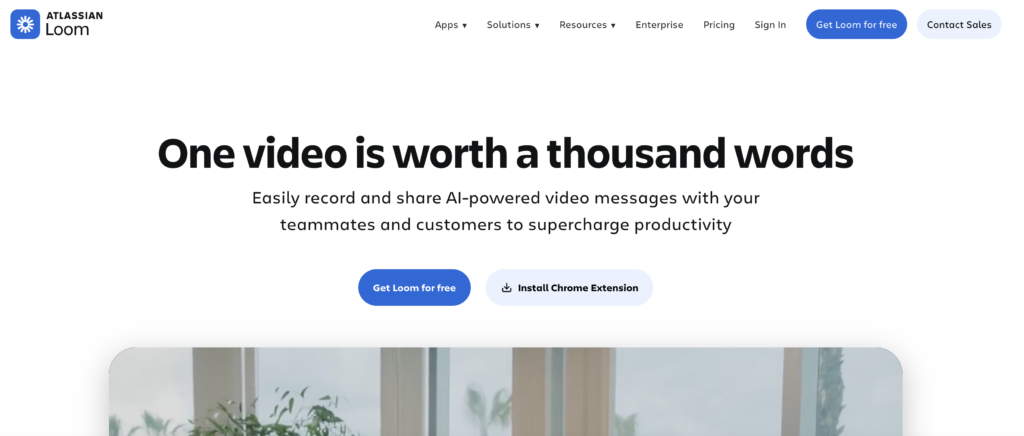
This strategy relies on the product itself as the primary driver of customer acquisition, retention, and expansion. For Loom, every shared video became a small distribution event.
- Market research and target audience: Loom targeted knowledge workers frustrated by synchronous meetings and slow communication. Early adoption was strongest in product, design, engineering, and customer success teams inside tech companies.
- Value proposition and messaging: Loom’s message was essentially “send a video, not a meeting.” That tied the product to clear business objectives: save time, improve clarity, and reduce unnecessary calls.
- Product design choices: One-click recording, a browser extension, lightweight onboarding, and a shareable URL made the first experience fast. The customer journey from receiving a Loom to making one was short.
- Customer acquisition and marketing strategy: Each video link exposed the product to another user. Loom relied heavily on word of mouth, organic sharing, and low-friction self-serve adoption rather than heavy early paid spend.
- Sales strategy: Loom started with individual users and teams, then layered in a sales team to close larger B2B accounts once usage inside companies was visible.
- What to copy: Build sharing into the product, reduce time to first value, and design the GTM strategy around organic loops rather than only ads.
Combining product-led acquisition with sales-led enterprise expansion allows for capturing massive corporate contracts while reducing friction of entry.
Example 2: Snappa – SEO-Led GTM for a Bootstrapped SaaS Product
Snappa launched in 2015 as a graphic design tool for non-designers. Instead of trying to outspend bigger competitors, it used SEO as a primary customer acquisition channel.
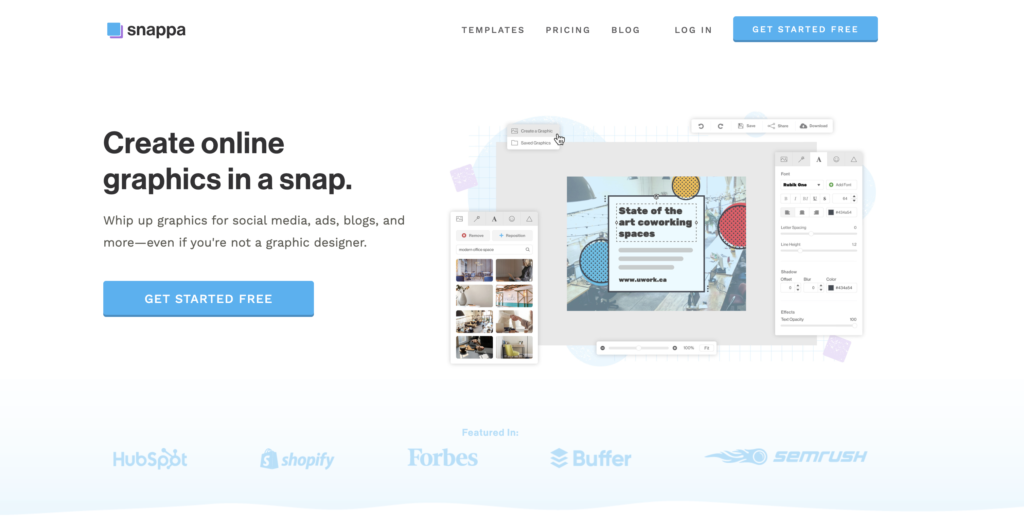
The company focused on people who needed quick marketing images but did not have design support. That included bloggers, small B2B businesses, creators, and marketers who wanted speed more than a full creative suite.
- Market research: Snappa identified search demand around terms like online graphic design tool, create social media graphics, and image-size queries. This helped the team find gaps in an existing market where simplicity mattered.
- Target audience and positioning: The ideal customer was a marketer or small business owner without a design team. The positioning was not “design anything”; it was closer to “create marketing images in minutes.”
- SEO-focused marketing strategy: Snappa built content around high-intent use cases such as Twitter header size and Facebook ad image size. Each page educated users and moved them toward the product.
- Pricing and conversion: A freemium pricing model lowered friction. High-intent organic visitors could try the tool quickly, then upgrade when limits or advanced needs appeared.
- Outcomes and learnings: SEO created sustainable customer acquisition with low customer acquisition cost for a bootstrapped team. The lesson is to pick winnable SERPs, build product-adjacent content, and connect organic growth to MRR and payback period.
SaaS companies often leverage a mix of marketing channels, including content marketing strategies, email marketing, social media, and SEO for SaaS, to reach their target audience effectively. The choice of marketing channels should align with the target audience’s preferences and behaviors, ensuring that the distribution methods resonate with potential customers.
Example 3: Slack – From Niche Team Tool to B2B SaaS Category Creator
Slack’s 2013–2014 launch strategy was built on invite-only beta usage, tight customer feedback loops, and a freemium model that let teams become evangelists. It did not begin as a broad “work platform.” It began as a better way for teams to communicate.
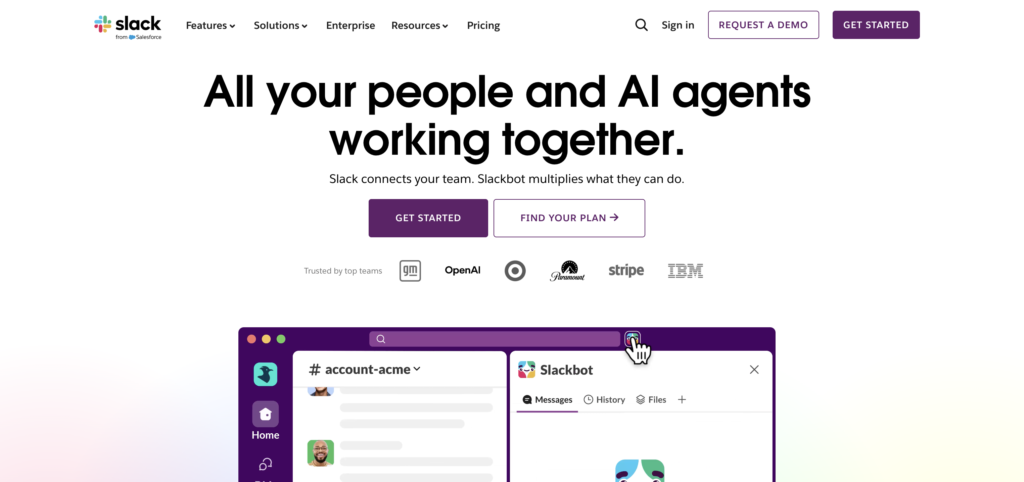
- Early product-market fit validation: Slack tested with internal teams and small groups of developers before broader launch. Feedback refined onboarding, workflows, notifications, and integrations.
- Target audience and positioning: Slack focused first on technical and product teams inside startups and SMBs. Its early message was the “email killer” for internal communication.
- Product-led, bottom-up sales strategy: A few people in a company could start using Slack, invite teammates, and expand usage across departments. Later, Slack added enterprise sales for larger accounts.
- Marketing strategy and customer acquisition: Slack relied on product-led virality, customer referrals, word of mouth, simple landing pages, and a strong brand voice more than heavy outbound at first.
- Conversion and monetization: The free tier allowed meaningful usage but limited message history and advanced controls. Active teams had a natural reason to upgrade.
- Metrics that mattered: Seat expansion, logo growth, customer retention, and net revenue retention showed whether Slack was becoming part of daily work.
The takeaway is simple: focus on one painful problem, make the free product genuinely useful, then let the sales process follow proven organic usage.
Example 4: Mailchimp – Content & Organic Growth Before Going Upmarket
Mailchimp began as an email marketing SaaS for small businesses and freelancers. Long before it became a broader marketing platform, it won by serving non-technical users that enterprise tools ignored.
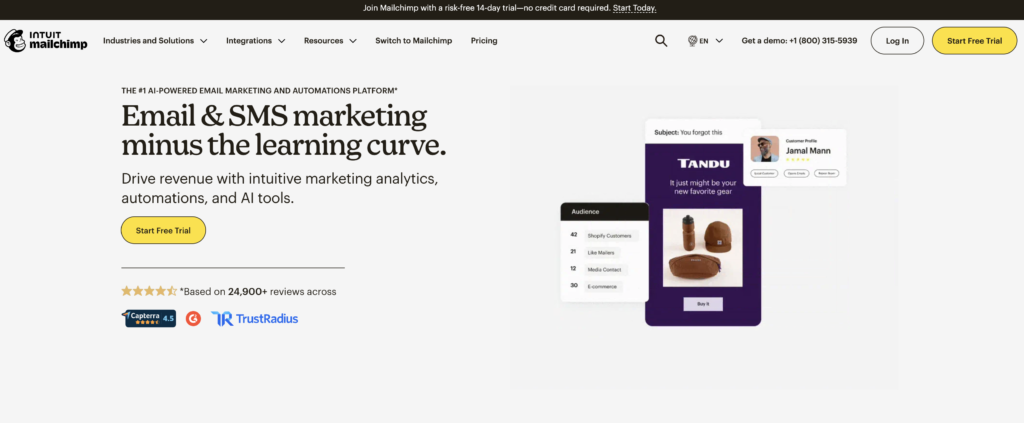
This strategy prioritizes building brand trust through extensive educational content, positioning the product as the ultimate solution to a specific business problem.
- Market research and audience: Mailchimp found a large underserved segment: small B2B and B2C businesses priced out of complex enterprise email tools. Its target customers needed easy campaign creation, templates, and reporting.
- Freemium and pricing: In 2009, Mailchimp introduced freemium and reportedly grew from about 85,000 to 450,000 users in the first year. Tiered pricing mapped to list size and advanced features.
- Organic marketing strategy: Guides, resources, and educational content helped Mailchimp attract customers who were searching for email marketing advice before they were ready to buy.
- Brand differentiation: Freddie the mascot, informal copy, and approachable UX helped Mailchimp stand out in a dry category.
- Business objectives and outcomes: Mailchimp grew to millions of users while largely bootstrapped. Low CAC, education-led onboarding, customer loyalty, and strong customer relationships supported growth.
The lesson is that content can do more than generate demand. When content answers real customer pain points, it also improves activation, customer success, and customer lifetime.
Example 5: Dropbox – Referral-Driven Freemium GTM
Dropbox is one of the clearest B2B SaaS go-to-market strategy examples because its referral loop solved a real economic problem. Paid acquisition was too expensive: estimates put AdWords acquisition at $233–$388 per paying customer while the annual plan was around $99.
Instead, Dropbox embedded referrals directly into the product. By late 2008, users could invite others and both sides received extra storage. According to referral breakdowns, Dropbox grew from about 100,000 registered users in September 2008 to about 4 million in December 2009.
- Target audience and problem definition: Early users were developers and power users who needed reliable sync, backups, file access across devices, and relief from email attachment limits.
- Product experience: Dropbox made sync feel invisible. Install it once, then files appear where you need them. That frictionless experience made referrals feel safe.
- Referral-based customer acquisition: The two-sided incentive gave extra storage to both the referrer and new user. The reward matched the core product value.
- Pricing and conversion: Free storage created adoption. Heavy users naturally upgraded to paid plans as storage needs grew.
- Lessons for B2B SaaS: Referral loops can work for team adoption, seat expansion, feature unlocks, or partner rewards. But they must be engineered into the product and measured with attribution and conversion rates.
Referrals reportedly accounted for around 35% of daily signups at peak, making Dropbox a benchmark for product-led go-to-market execution.
Example 6: Shopify – Ecosystem-Led GTM for SMB Commerce
Shopify started from a specific pain point: its founders wanted to run an online snowboard store but disliked the available e-commerce tools. From that narrow beginning, Shopify built infrastructure for merchants who wanted to sell without hiring developers.
By Q2 2015, Shopify had surpassed 175,000 merchants, with quarterly GMV of about $1.6 billion and MRR of about $8.5 million, according to Shopify’s 2015 financial results.
- Market research and ICP: Shopify targeted small merchants frustrated with clunky, developer-heavy e-commerce platforms. The niche expanded from snowboard retail to almost any small retailer.
- Core value proposition: The message was simple: start an online store in minutes without developers. That reduced launch cost and shortened time to first sale.
- Ecosystem-based GTM: Shopify built an app store and theme marketplace around 2009–2010. Agencies, developers, and app partners became distribution channels.
- Marketing and distribution: Documentation, partner programs, integrations, and content helped merchants and developers adopt the platform.
- Pricing and plan structure: Shopify used tiered subscription plans aligned to merchant maturity. This supported predictable recurring revenue and expansion as merchants grew.
- What to copy: Build ecosystem partners as multipliers, design pricing around growth stages, and move from a feature story to a platform narrative.
Cultivating an organic community of users, developers, or advocates helps to drive adoption and reduce marketing spend.
Comparing GTM Motions: Product-Led, Sales-Led, and Hybrid in B2B SaaS
The examples above show that GTM success rarely comes from one tactic. It comes from matching the GTM motion to the business model, average contract value, product complexity, and buyer behavior.
- Product-led growth: Loom, Slack, and Dropbox used free tiers, quick onboarding, and viral loops. PLG works when a user can see value in minutes and invite others without a complex rollout.
- Sales-led growth: Later-stage Slack and Shopify Plus use sales reps, demos, proof-of-value, procurement support, and a dedicated sales team for larger deals.
- Hybrid GTM: Mailchimp and Shopify combined self-serve acquisition with content, partners, and sales expansion. This is where many B2B SaaS companies end up.
- Account-based marketing: The Strategy to target individual high-value prospects treats them as their own unique markets and utilizes personalized content, tailored pricing, and dedicated sales teams.
- Motion by objective: PLG fits rapid user growth, sales-led fits high ACV complex deals, and hybrid fits sustainable organic acquisition plus expansion.
- Selection criteria: Look at ACV, implementation complexity, buying committee size, sales process velocity, and whether the product can show value quickly.
Effective marketing strategies for SaaS products often include a combination of inbound and outbound tactics to maximize lead generation and customer engagement. Outbound can include email, LinkedIn, events, or direct mail, but the channel should match how your target customers actually buy.
How Organic Growth Fits Into B2B SaaS GTM
Organic growth is not just a traffic channel. For B2B SaaS, organic is often where potential customers discover the problem, compare solutions, validate trust, and enter the sales funnel before they ever talk to sales.
I diagnose the structural constraints that stop organic from becoming pipeline. More traffic does not automatically mean better customer acquisition, stronger retention, or lower CAC.
- Common structural constraints: keyword strategy misaligned with the ICP, landing pages optimised for visits rather than meaningful conversion, and fragmented messaging between product, marketing, sales, and customer success.
- Organic Growth Diagnostic: The diagnostic assesses ten components of the organic growth engine: Narrative & Positioning, Accessibility, Category Presence, Demand Match, Authority Flow, Conversion Architecture, Trust, AI Visibility, Operating System, and Expansion. The goal is to identify which one is the binding constraint.
- Applying this to examples: Snappa’s product-adjacent SEO and Mailchimp’s educational engine worked because they matched real searches to real pain points. Many launches fail because organic is added late after paid demand generation gets expensive.
- In the GTM context, the four engagements each serve a different need: the Organic Growth Diagnostic identifies the binding constraint, the Engine Build creates organic growth foundations for early-stage companies, the Organic Growth Fix resolves stalled performance, and the Fractional Organic Growth Lead provides senior direction for Seed through Series E teams.
This is an ongoing process. Regular performance reviews and adjustments based on real-time data are critical for maintaining alignment and improving the execution of a go-to-market strategy.
Designing Your Own B2B SaaS Go-To-Market Strategy: A Practical Checklist
Use this checklist to turn the market strategy examples above into an operating system for your own launch strategy.
- Clarify business objectives for the next 12–24 months, including MRR, CAC payback, pipeline coverage, retention, expansion, and segment penetration.
- Conduct focused market research to validate demand, competitor gaps, buyer behavior, preferences, and customer pain points.
- Define a sharp ICP by company size, industry, role, budget, urgency, buying behaviors, and firmographic information.
- Build buyer personas for the economic buyer, end user, technical evaluator, and internal champion.
- Articulate a concrete value proposition tied to one or two measurable outcomes your product improves.
- Choose your primary motion: PLG, sales-led, or hybrid based on ACV, implementation complexity, and buying committee size.
- Build a marketing plan around one to three core channels such as SEO, content marketing, outbound, partner programs, email marketing, or social media marketing.
- Design a pricing strategy that supports adoption and expansion. A well-defined pricing strategy can significantly impact customer acquisition and retention, making it a key component of a successful go-to-market strategy.
- Select the right pricing model, whether freemium, flat-rate, usage-based, tiered pricing, or a subscription based pricing model.
- Map the customer journey from awareness to signup, onboarding, sales enablement, purchase, customer success, renewal, and expansion.
- Align marketing and sales teams on messaging, qualification, handoffs, objections, and follow-up.
- Equip the sales team with proof, product usage data, competitive positioning, and sales enablement material.
- Track key performance indicators across the funnel, including traffic, trials, demos, conversion rates, customer acquisition cost, customer lifetime value, win rate, churn, customer engagement rates, sales process velocity, and pipeline coverage.
- Use customer feedback from onboarding, support, churn analysis, and win-loss reviews to refine product, messaging, and sales efforts every 30–90 days.
Implementing a go-to-market strategy can help businesses achieve faster market entry, improved customer understanding, and streamlined resource allocation, ultimately leading to a competitive advantage.
Turning GTM Strategy Examples Into a Repeatable Growth Engine
The strongest B2B SaaS go-to-market strategy examples share a pattern. They start with a clear target audience, a painful problem, a simple value proposition, and a GTM motion that matches how people actually discover, try, buy, and expand the product.
Loom and Dropbox built virality into the product. Snappa and Mailchimp used organic content to attract high-intent users. Slack began with focused team adoption before expanding into enterprise. Shopify turned partners, developers, and apps into an ecosystem-led growth engine.
Use this article in three ways:
- Pick one or two examples closest to your business model and compare them against your current SaaS go-to-market approach.
- Audit the basics: Is your market research strong? Is your ICP precise? Are your conversion rates aligned with business objectives?
- Review whether your organic engine is structurally able to generate demand, attract customers, and support revenue growth.
For B2B SaaS teams where organic is a primary acquisition channel, a structured diagnostic can reveal the constraint holding back GTM performance. The goal is not another one-off launch. The goal is a repeatable system for product launches, expansion, and long-term customer relationships.
GTM is not a one-time checklist. It is a data-informed discipline that improves as your product, customers, and market evolve.